My Faith Journey
I went looking for God on October 27, 1984. The contract that had served me well for over fifty years had lapsed. This agreement said that if I obeyed God’s word and prayed each day, I would prosper and live a happy, productive life.
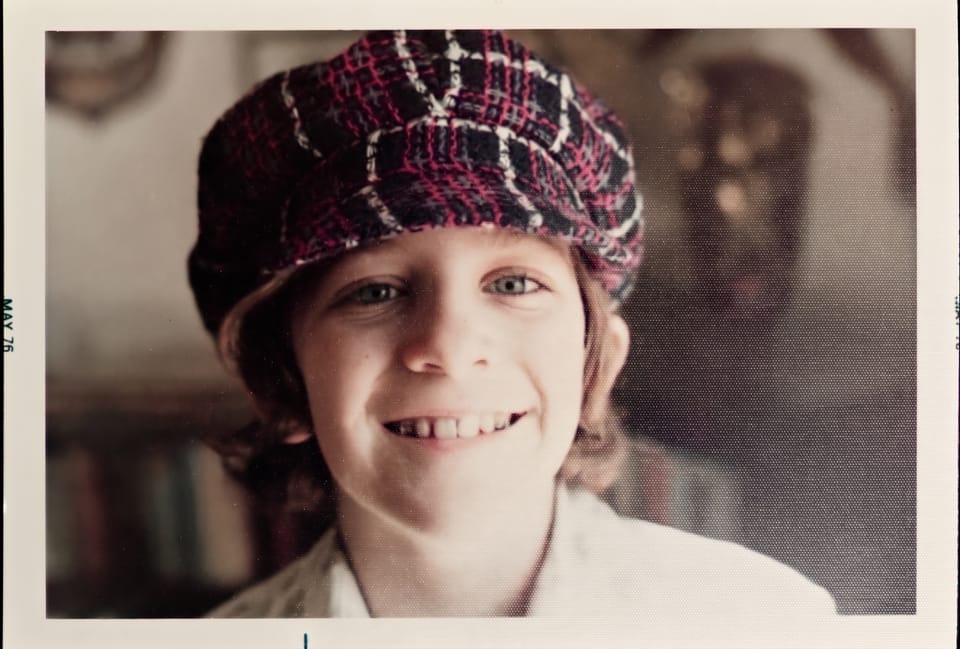
Tragedy struck that day, October 27, 1984, when David, our youngest son and a freshman at UT, entered the hospital with what was diagnosed as a psychotic break. I was fifty and unemployed. Our eldest son, Rod, was a senior at Baylor.
Coming home from the hospital four weeks later, David looked and sounded like our son; yet, his personality had been transformed. It was as if a demon had entered his body. Our nightmare began. He seemed bent on destroying himself and us in bizarre ways.
When I talked to his doctor who suggested that a consulting psychiatrist be called in, I asked why, explaining that I thought he was on drugs. The doctor said, “It’s more serious than drugs. You may wish he were on drugs. I believe he has had a psychic break.”
A psychiatrist was consulted and recommended hospitalization. Thus began our long nightmare.
We were unprepared and bewildered. We did not understand the nature or the magnitude and severity of his illness. The best doctors appeared helpless; support groups became crying sessions; and hope faded with each passing year.
After a dozen hospitalizations over the next seven years, five different psychiatrists diagnosed his illness as paranoid schizophrenia. There is a good reason the word schizophrenia has such ominous connotations. It is a cruel disease. The victims suffer terribly. Family members are exhausted emotionally, psychologically, and financially trying to provide care.
We know so little about schizophrenia that I must digress for a moment and summarize current thinking about this dreadful disease.
Childhood trauma, domineering mothers and/or passive fathers do not cause it.
It is a real disease with a genetic component that is the result of flawed brain chemistry, a brain disease like multiple sclerosis, Parkinson’s and Alzheimer’s.
It is not the same as a split or a splintered personality condition. Rather it is a splitting within a single personality of the person’s thought content and the accompanying emotion. It is not responsive to treatment by psychotherapy.
I won’t dwell on the years our family has suffered trying to live with David’s condition. There have been repeated, gut-wrenching periods of denial, anger, guilt, despair and hopelessness. Perhaps, worst of all has been the cumulative effect of these corrosive emotions.
Time passed and my son’s condition worsened. In 1993, we became aware of a private, medical clinic in Austin that offered the full-time psychiatric care and monitoring that David required. With David out of the house, I achieved some limited detachment and reflected on what had been happening.
During the worst times, I replayed in my head the church songs of my youth. I like music that identifies the struggles of faith, such as: “Nearer, My God, to Thee”; “Onward, Christian Soldiers”; and “Eternal Father, Strong to Save.”
In addition to other religious literature, I must have read the Book of Job a dozen times searching for answers. Where was the just and merciful God I had believed in?
David had never done anything bad in his whole life. He was a bright, sweet and loving son on the verge of manhood. Why had God chosen to punish him so harshly?
More clever minds than mine may find an answer that satisfies. I didn’t. Yet, somehow, I realized that my faith was all I had. But my faith was weak. I was clinging to God by my fingernails. Eventually, I accepted the reality of David’s condition and concentrated on being the best caregiver possible.
Slowly, after much reflection, I began to sort out my thoughts. Throughout our ordeal, there have been happenings of what I now view, in retrospect, as divine intervention. I am not referring to a sudden, dramatic improvement in David’s condition nor have I heard God’s voice or seen a vision. I’m suggesting quiet events that passed unnoticed. I had been so lost in a crucible of misery and despair that I was unable to recognize God’s loving care.
God has given me a wife most men only dream about: a fighter who never gives up but is quick to forgive; a tender mother who brought out the best in our children; and a loving, reassuring force who has sustained me. Truly, Frances is a companion to walk with through hell.
Shortly after the onset of David’s illness in 1984, I found a challenging job at a major corporation with excellent medical benefits. This greatly lessened our anxiety over mounting medical bills.
During the grimmest years of our struggle when my personal life was in chaos, my professional life flourished. I view that as an extraordinary blessing because it made possible comprehensive medical treatment for David.
In 1991, after seven years of heartache and struggle, all the joy in our lives had drained away. Heartsick and broken, Frances and I entered long-term therapy with Dr. Dennis Geary, a clinical psychologist. Over the weeks and months that followed, we regained a measure of mental health. Was it a coincidence that we found the right therapist at the right time? I think not.
I mentioned earlier that David is now in a private medical clinic in Austin. Two years (August 1995) after enrollment in their program, David’s condition stabilized. Surely, this wasn’t just a lucky happenstance.
For the first fifty years of my life, my childish view of God was unchallenged. From then on, however, the journey has become a titanic struggle. Presently, I know nothing except that there is a divine presence in our lives for I have been blessed in many unexpected and undeserved ways.
Today in my ninth decade, I have concluded that the human condition is inherently painful. Wounds can be opened anytime by a variety of events and circumstances. Bad and unexplained things can and do happen to every human being. If we thought of our health, our jobs, our status in the community, our wealth, and our loving family members as temporary gifts, we might more fully understand the true nature of life.
All human beings carry heavy burdens.
As no other before him, Jesus understood this common bond of suffering that we share and cannot escape. From love, he healed the sick. From love, he spoke passionately, clearly and often about mercy, forgiveness and caring for our fellow man.
In my heart, I doubt if most of us are up to the challenges real goodness presents. Learning to trust God as Jesus did is hard work. We must start over each day as if nothing had been accomplished the day before. But to the extent that we embrace God’s Grace and permit Christ’s Spirit to transform our attitudes, we too may become beloved sons and daughters of God. And that, I believe, is the ultimate purpose of our lives.
Our beloved son, David Christopher Johnson died on 5 May 2020 in Austin, TX.
Member discussion